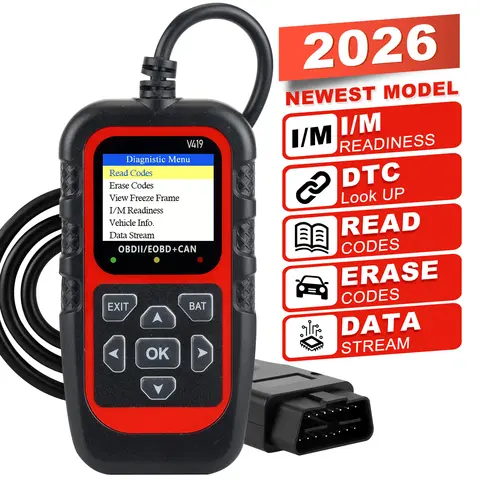







Results for code readers
Code readers are essential tools for decoding and interpreting digital signals, barcodes, RFID tags, and embedded system data—commonly used in industrial automation, logistics, inventory management, and smart device integration. Whether you're managing warehouse operations, configuring embedded modules, or setting up automated systems, reliable code readers ensure fast, accurate data capture across diverse environments.
The search intent behind “code readers” typically reflects a need for precision, durability, and compatibility with existing hardware systems. Users are often looking for devices that support multiple code types (e.g., QR codes, 1D barcodes, RFID), offer plug-and-play functionality, and integrate seamlessly with control systems. Based on real-world usage, the most effective code readers combine robust build quality, high scanning speed, and support for standardized protocols—critical factors when deploying in industrial or commercial settings.
For users working with integrated circuits like the K200A01–K200A7004 modules, selecting a compatible code reader ensures seamless communication between the module and host systems. These modules are commonly used in automation and control systems where real-time data input is critical. To avoid compatibility issues:
In food processing applications, such as with the FUWODA DY-368 grinder, code readers can be used to track batch numbers, monitor maintenance schedules, or manage inventory of spare parts. Similarly, in home decor, while the OEING jacquard bedding set may not directly use code readers, the concept of “scanning” applies to product authentication and warranty verification—where QR codes on packaging allow users to access care instructions or verify authenticity.
Ultimately, choosing the right code reader involves balancing performance, compatibility, and long-term reliability. Prioritize models with CE certification, stainless steel housings for durability, and proven track records in similar applications. For technical integrations, always consult the module’s datasheet and consider using a test setup before full deployment.
The search intent behind “code readers” typically reflects a need for precision, durability, and compatibility with existing hardware systems. Users are often looking for devices that support multiple code types (e.g., QR codes, 1D barcodes, RFID), offer plug-and-play functionality, and integrate seamlessly with control systems. Based on real-world usage, the most effective code readers combine robust build quality, high scanning speed, and support for standardized protocols—critical factors when deploying in industrial or commercial settings.
- Code Reader
- A device designed to scan and interpret machine-readable codes such as barcodes, QR codes, or RFID signals, converting them into digital data for processing by computers or control systems.
- Module (in electronics)
- A self-contained component, such as the K200A series, that performs a specific function (e.g., signal decoding) and can be integrated into larger systems like industrial controllers or IoT devices.
- Scanning Accuracy
- The ability of a code reader to correctly identify and interpret codes under various conditions, including low lighting, damaged labels, or high-speed movement.
For users working with integrated circuits like the K200A01–K200A7004 modules, selecting a compatible code reader ensures seamless communication between the module and host systems. These modules are commonly used in automation and control systems where real-time data input is critical. To avoid compatibility issues:
- Verify that the code reader supports the communication protocol used by your module (e.g., RS-485, UART, or I2C).
- Check the input voltage and power requirements—some readers operate at 5V, while others require 12V or 24V.
- Ensure the reader’s scanning resolution and speed match the data throughput demands of your application.
- Test with sample codes under actual operating conditions (e.g., temperature, vibration) to confirm reliability.
- Use shielded cables and proper grounding to minimize electromagnetic interference, especially in industrial environments.
In food processing applications, such as with the FUWODA DY-368 grinder, code readers can be used to track batch numbers, monitor maintenance schedules, or manage inventory of spare parts. Similarly, in home decor, while the OEING jacquard bedding set may not directly use code readers, the concept of “scanning” applies to product authentication and warranty verification—where QR codes on packaging allow users to access care instructions or verify authenticity.
Ultimately, choosing the right code reader involves balancing performance, compatibility, and long-term reliability. Prioritize models with CE certification, stainless steel housings for durability, and proven track records in similar applications. For technical integrations, always consult the module’s datasheet and consider using a test setup before full deployment.